
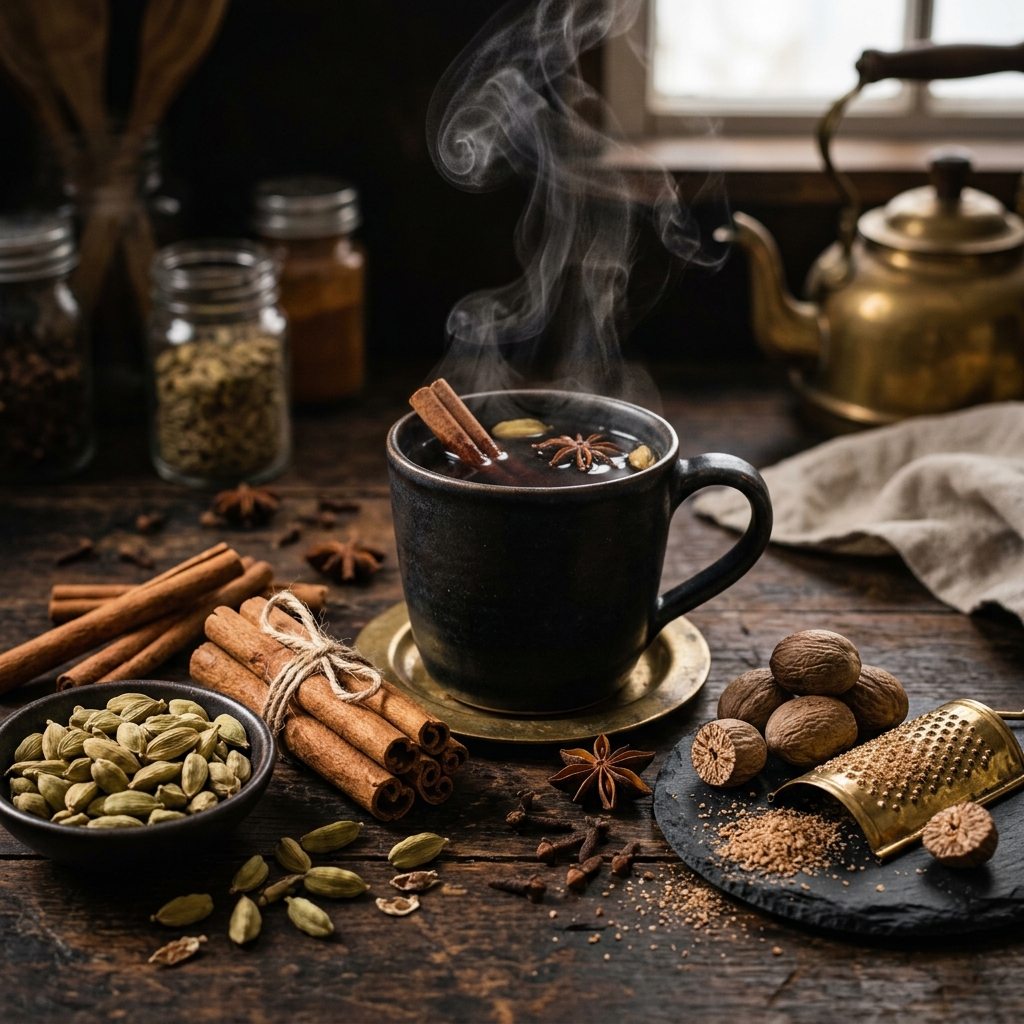
Spice in Your Sip
Spices are no longer confined to the dinner plate. The global beverage industry—spanning artisanal teas, craft cocktails, and health drinks—is increasingly relying on the complex flavor profiles of premium Indian spices.
This shift reflects a broader consumer trend toward complex, layered flavor experiences in beverages, moving beyond simple sweetness toward warming, aromatic, and even functional ingredients that consumers associate with wellness, a positioning that Indian spices, with their long history in traditional medicine and Ayurveda, are particularly well suited to support.
The Flavor Innovators
- Green Cardamom: Its sweet, eucalyptus-like flavor is essential for authentic Chai and innovative craft sodas. Check out our Premium Green Cardamom.
- Cassia Cinnamon: Providing warmth and natural sweetness to coffees, winter ales, and health tonics. See our Cassia Cinnamon.
- Nutmeg & Mace: Used in eggnogs, spiced rums, and premium bitters for a rich, nutty depth.
- Black Pepper: A surprising yet popular addition to turmeric lattes (Golden Milk) to enhance curcumin absorption.
- Dry Ginger: The backbone of ginger beers, kombuchas, and herbal teas.
The Quality Mandate
Beverage manufacturers require spices with high essential oil content to ensure robust flavor extraction. Sourcing directly from Indian processing hubs guarantees maximum freshness and aroma.
Extraction Formats for Beverage Manufacturing
Beverage manufacturers source spices in several different formats depending on their production method. Whole spices are preferred for cold-brew infusions and traditional Chai preparation where slow extraction develops depth of flavor, while spice extracts and essential oils offer manufacturers a concentrated, standardized flavor input that simplifies large-scale production and ensures batch-to-batch consistency, an important factor for beverage brands maintaining a signature flavor profile across high-volume bottling runs.
Spice oleoresins, concentrated extracts that capture both the flavor and color compounds of a spice, are also increasingly used in functional beverage formulations, particularly for ingredients like turmeric and ginger where manufacturers want a concentrated dose of the active compound without the texture or visual impact of using the whole spice.
Meeting Beverage Industry Documentation Standards
Beverage manufacturers, particularly those producing functional or health-positioned drinks, often require detailed certificates of analysis covering active compound content, such as curcumin percentage in turmeric or gingerol content in ginger, in addition to standard microbial and heavy metal testing. Indian exporters supplying this segment increasingly maintain in-house or third-party lab testing capabilities to provide this level of documentation alongside each shipment.
Pairing Spices with Emerging Beverage Categories
As functional beverages, kombucha, and botanical sodas continue gaining shelf space alongside traditional soft drinks, formulators are experimenting with spice pairings beyond the classic Chai blend, combining cardamom with citrus notes, or ginger with turmeric and black pepper for anti-inflammatory positioned tonics. This experimentation has created demand for smaller, more frequent shipments of diverse spice varieties as beverage brands test new formulations, a sourcing pattern that favors exporters able to offer flexible order quantities alongside their standard bulk supply capabilities.
Enhance your beverage formulations with our Premium Spices.