
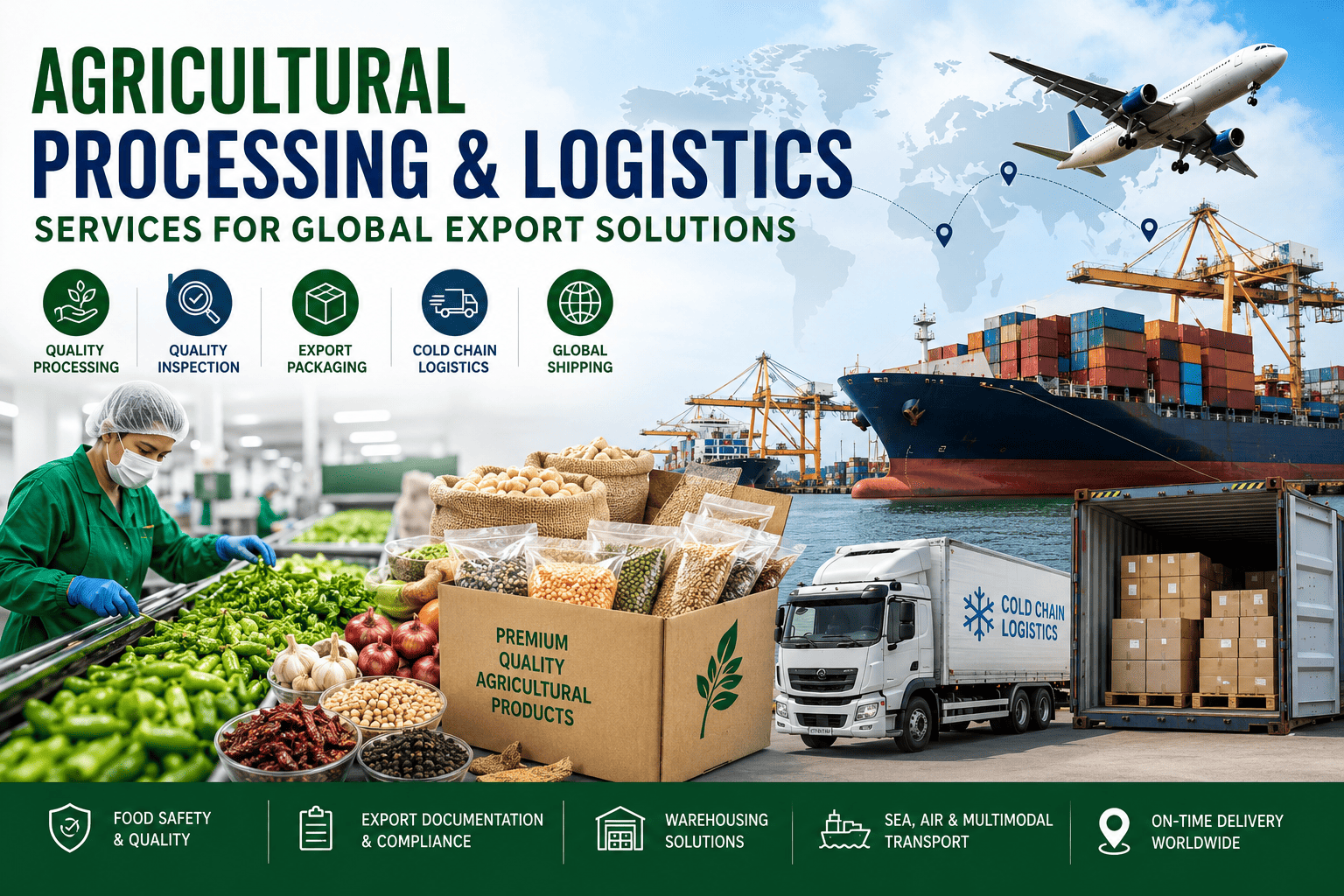
Agricultural Processing & Logistics Services: The Backbone of Global Agricultural Exports
In today's competitive international market, agricultural processing and logistics play a vital role in delivering safe, high-quality products from farms to buyers worldwide. Whether exporting fresh fruits, vegetables, spices, grains, pulses, oilseeds, herbs, or animal feed ingredients, every product must undergo careful processing, quality inspection, packaging, and transportation before reaching its destination.
Efficient agricultural processing services and reliable export logistics solutions ensure products retain their quality, freshness, and nutritional value while complying with international import regulations. Businesses that invest in modern processing facilities and streamlined logistics benefit from reduced product losses, faster deliveries, and improved customer satisfaction.
If you're looking to source premium agricultural products, explore our Agricultural Products or learn more About Us.
What Are Agricultural Processing Services?
Agricultural processing refers to the preparation of raw agricultural commodities before they enter domestic or international markets. Processing enhances product quality, improves shelf life, and ensures products meet buyer specifications and food safety standards.
Modern food processing services include cleaning, grading, sorting, polishing, drying, milling, packaging, labeling, and quality inspection. These processes remove impurities, maintain product consistency, and improve overall market value.
Proper agricultural processing also minimizes contamination risks and helps exporters comply with international food safety requirements established by regulatory authorities worldwide.
Why Processing Matters for Agricultural Exports
International buyers expect products that meet strict quality standards. Every shipment must be consistent in appearance, moisture level, purity, size, packaging, and labeling.
- Improves product quality and consistency.
- Increases shelf life.
- Reduces contamination risks.
- Meets international import standards.
- Enhances buyer confidence.
- Supports long-distance transportation.
- Minimizes product wastage.
Quality Inspection: Ensuring Export Excellence
Quality inspection is one of the most critical stages in the agricultural export supply chain.
Inspection procedures commonly include:
- Visual quality inspection.
- Moisture testing.
- Foreign material removal.
- Product grading.
- Packaging inspection.
- Weight verification.
- Label verification.
- Final shipment approval.
Export Packaging Solutions
Packaging protects agricultural products throughout transportation and storage.
- PP woven bags.
- BOPP laminated bags.
- Vacuum packaging.
- Corrugated cartons.
- Mesh bags.
- Jute bags.
- Food-grade liners.
- Retail packaging.
Cold Chain Logistics for Perishable Products
Fresh fruits, vegetables, herbs, and other temperature-sensitive products require cold chain logistics to preserve freshness during transportation.
Warehousing and Inventory Management
Modern warehousing solutions support efficient inventory management before export.
International Shipping and Freight Solutions
- Air Freight
- Sea Freight
- Full Container Load (FCL)
- Less than Container Load (LCL)
- Multimodal Transportation
- Door-to-Port Delivery
- Door-to-Door Shipping
Export Documentation and Customs Clearance
Export documentation typically includes commercial invoices, packing lists, certificates of origin, phytosanitary certificates (where applicable), shipping bills, bills of lading, insurance documents, and customs declarations.
Useful resources: APEDA, DGFT, ICEGATE, FSSAI, WTO.
Benefits of Professional Agricultural Processing & Logistics
- Higher product quality.
- Improved food safety.
- Better shelf life.
- Reduced post-harvest losses.
- Faster international deliveries.
- Lower transportation risks.
- Compliance with global standards.
- Increased customer satisfaction.
- Reliable supply chain management.
- Greater export competitiveness.
Conclusion
Agricultural processing and logistics are essential components of a successful export business. Investing in professional processing and logistics helps ensure products reach global markets safely, efficiently, and in the best possible condition.
To learn more about agricultural exports or explore our product range, visit our Products page or Contact Us.