
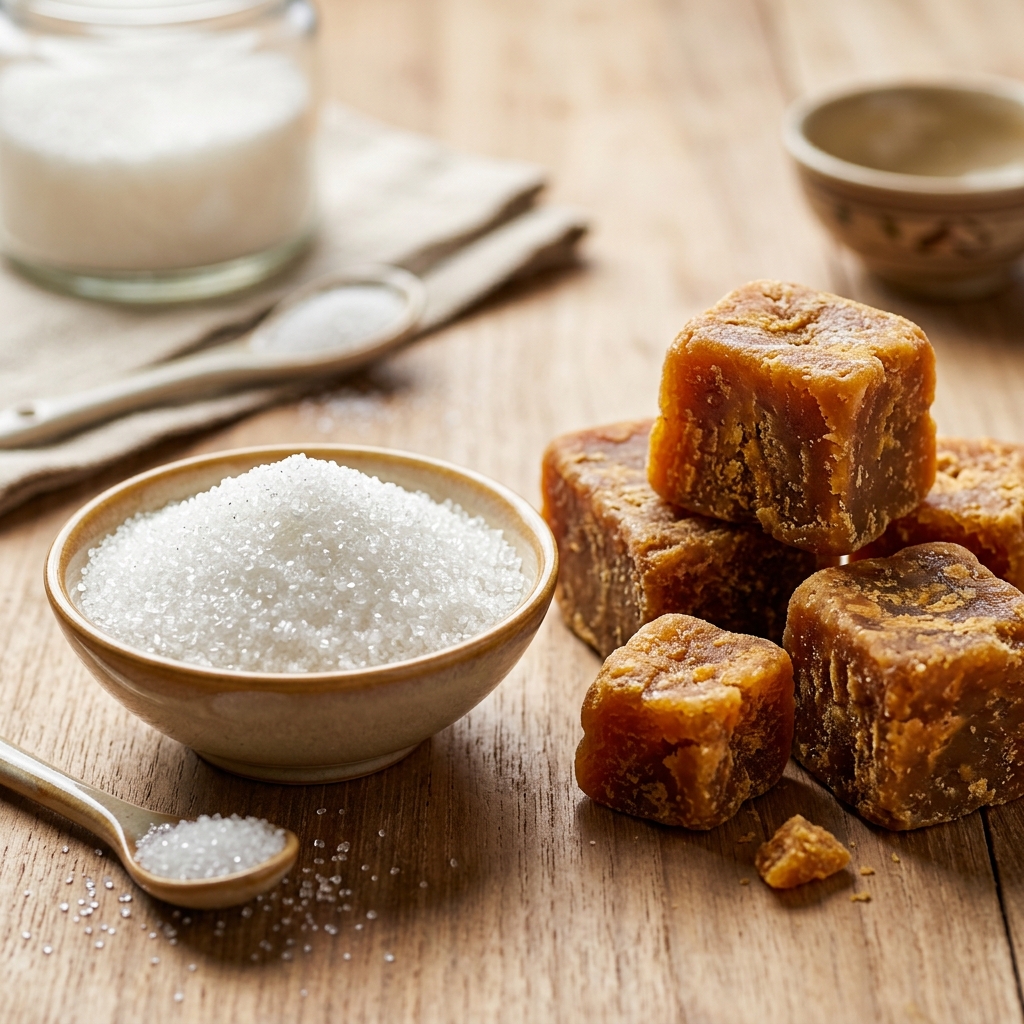
India: The Sweetener Superpower
India is one of the world's largest producers of sugarcane, offering a diverse portfolio of sweeteners ranging from highly refined industrial sugars to traditional, mineral-rich jaggery.
This dual capability, supplying both highly standardized industrial-grade sugar and traditional, minimally processed jaggery, gives Indian exporters a unique position in the global sweetener market, capable of serving the precise specifications of large beverage manufacturers and the growing natural-foods segment from the same agricultural base.
Refined White Sugar Grades
The food and beverage industry relies heavily on consistent sugar grades. S-30 Grade Sugar is preferred for its fine crystals and quick solubility, making it ideal for soft drinks. M-30 Grade Sugar features bolder crystals, often used in confectionery and bakery applications.
Beyond crystal size, buyers evaluate sugar on color (measured in ICUMSA units, with lower numbers indicating a whiter, more refined product), moisture content, and polarization, which measures sucrose purity. Export-grade Indian sugar typically targets ICUMSA 45 or below for premium white sugar applications, meeting the specifications required by major international beverage and food brands.
The Rise of Jaggery
With consumers shifting towards natural and unrefined foods, Premium Jaggery Powder and solid blocks are experiencing unprecedented export demand. Unlike refined sugar, jaggery retains molasses, offering essential minerals like iron and potassium. The FSSAI ensures stringent quality parameters for chemical-free jaggery production.
Jaggery Production and Quality Variation
Traditional jaggery is produced by boiling raw sugarcane juice in open pans until it reduces to a thick, concentrated syrup that solidifies as it cools, a process that preserves the natural minerals and molasses content stripped away during industrial sugar refining. Quality and color can vary considerably depending on the cane variety, soil conditions, and processing method, ranging from light golden to deep amber blocks, with buyers in different markets often having distinct color and texture preferences.
Powdered jaggery has grown particularly popular among health food brands and bakeries seeking an easy-to-measure, natural sugar substitute, while solid block jaggery remains the preferred format for traditional confectionery and South Asian diaspora retail markets.
Packaging and Export Logistics
Refined sugar is typically exported in 50kg PP woven bags for bulk industrial buyers or smaller retail-ready packaging for direct-to-consumer brands, while bulk vessel shipments serve large beverage manufacturers requiring container-load or multi-container quantities. Jaggery, being more moisture-sensitive than refined sugar, requires careful packaging in moisture-barrier pouches or sealed containers to prevent the product from softening or developing mold during long transit periods, particularly when shipping through humid tropical ports.
Source high-quality sweeteners from our Sugar & Sweeteners category.