
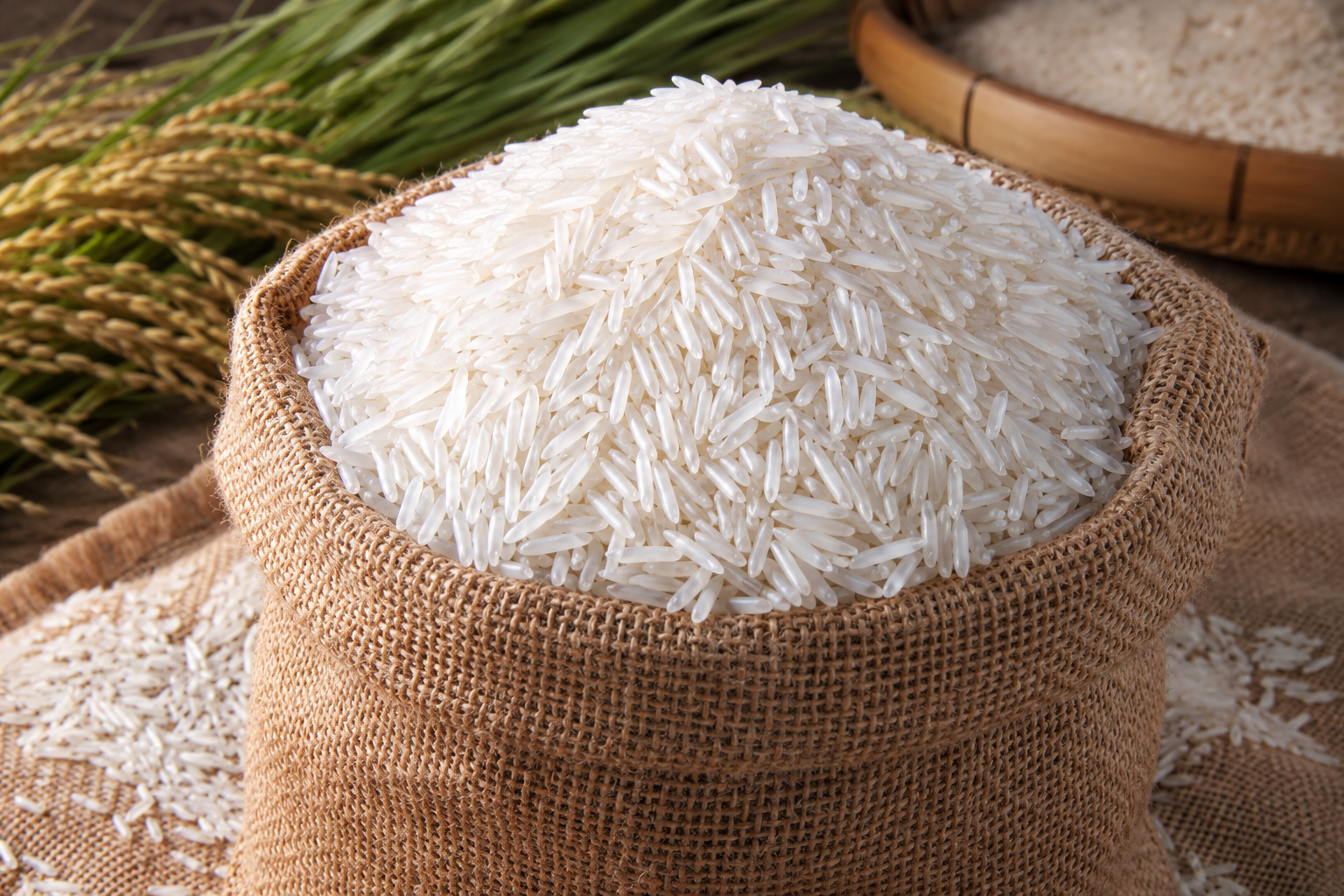
The Fragrant Heritage of India
Indian Basmati rice is not just a grain; it is a legacy of the fertile Indo-Gangetic plains. Known for its distinct aroma, extra-long grain, and non-sticky texture, it has become a staple in fine dining from the Middle East to Europe. For exporters and importers, understanding the nuances of different grades is key to success.
The unique characteristics of Basmati come from a combination of soil, climate, and centuries of selective cultivation across Punjab, Haryana, and the foothills of the Himalayas. Unlike ordinary long-grain rice, authentic Basmati elongates to nearly twice its original length on cooking while staying separate and fluffy, a trait that makes it the preferred choice for chefs and food service operators who need consistent results at scale.
Key Varieties and Their Characteristics
- 1121 Basmati: The world record holder for grain length, reaching up to 8.4mm. It is highly sought after for Biryanis and premium pilafs. Check out our 1121 Steam Basmati for the highest quality.
- Sugandha Basmati: An economical yet fragrant alternative, often used in large-scale catering. See Sugandha Steam Rice.
- IR-64 Long Grain: While not a Basmati, this non-basmati variety is the backbone of global rice trade for its durability and taste.
Each variety serves a distinct segment of the market. 1121 commands a premium price point and is the variety most associated with export-grade quality, while Sugandha offers buyers a lower landed cost without sacrificing the characteristic Basmati aroma, making it a popular choice for institutional and food-service contracts where volume matters as much as prestige.
Quality Standards and Certifications
Exporting rice from India requires strict adherence to standards set by the APEDA (Agricultural and Processed Food Products Export Development Authority). Key parameters include moisture content (max 13%), purity (95%+), and the absence of discolored grains. At Ambe Terra International, we ensure every batch meets these global benchmarks.
Beyond APEDA registration, importers in regions like the EU and Middle East often require additional documentation, including pesticide residue analysis and certificates of origin confirming the rice was grown in the Geographical Indication (GI)-tagged Basmati-growing belt. Maintaining traceability from paddy procurement through milling and polishing is essential for meeting these requirements without delay at customs.
Processing, Aging, and Packaging for Export
Premium Basmati is typically aged for 12 to 24 months before milling, a process that reduces moisture content and enhances the rice's characteristic aroma and texture when cooked. Aging also strengthens the grain structure, reducing breakage during the milling and polishing stages that follow. After aging, grains pass through Sortex color-sorting machines to remove discolored or broken kernels, ensuring a uniform, polished appearance that meets the visual standards international buyers expect.
For export, Basmati rice is packed in moisture-resistant PP woven bags, vacuum-sealed retail pouches, or bulk jumbo bags depending on the buyer's distribution channel, with private labeling and custom branding available for importers building their own retail presence.
Choosing the Right Grade for Your Market
Selecting a Basmati grade depends heavily on the end-use application. Hotels, fine-dining restaurants, and premium retail brands typically gravitate toward 1121 Basmati for its long grain length and aromatic profile, since these qualities translate directly into customer-facing presentation. Institutional caterers, quick-service restaurant chains, and value-focused retail brands, on the other hand, often find Sugandha Basmati delivers the right balance of fragrance, cooking performance, and cost efficiency for high-volume purchasing.
Buyers should also factor in cooking-time consistency and water absorption ratio when evaluating samples, since these properties affect portion yield and kitchen labor costs at scale. Requesting a pre-shipment sample and conducting an independent cooking test is standard practice among experienced importers before committing to a full container order.
Explore our full Grains & Millets collection to find the perfect grade for your market.