
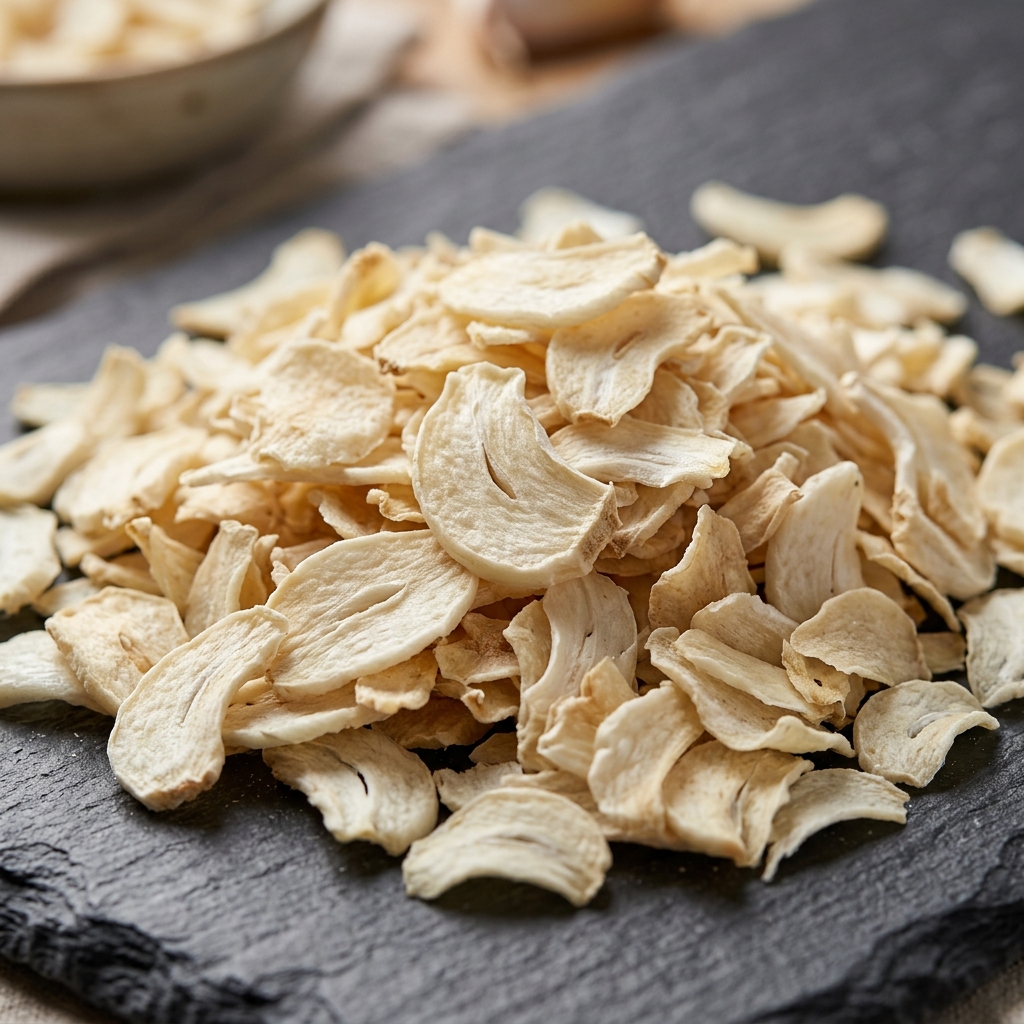
Efficiency Meets Flavor
In the world of industrial food processing, the supply of fresh ingredients can be volatile. This is where dehydrated products like Garlic Flakes and Onion Powder come in. They offer year-round availability, consistent flavor profiles, and significantly lower logistics costs due to their reduced weight.
Fresh garlic and onions lose up to 80% of their weight in moisture during dehydration, which means a single container of dehydrated product can replace several containers of fresh produce for an equivalent flavor yield, dramatically improving the economics of long-distance shipping for food manufacturers.
The Dehydration Process
Modern dehydration techniques in India use low-heat drying to ensure that the pungent oils and flavors are preserved. This makes Indian Dehydrated Onion Flakes a preferred choice for soup bases, seasoning mixes, and instant noodles worldwide.
The process begins with washing, peeling, and slicing fresh garlic cloves or onion bulbs, which are then passed through tunnel dryers or fluidized bed dryers at carefully controlled temperatures, typically between 55°C and 65°C, low enough to preserve the volatile sulfur compounds responsible for garlic and onion's characteristic pungency while still achieving the low moisture content needed for shelf stability.
Standards for the Global Market
Compliance with ISO 22000 and HACCP standards is mandatory for export. At Ambe Terra International, our processing units are equipped with advanced Sortex and cleaning machines to ensure zero contamination.
Product Formats and Particle Sizes
Dehydrated garlic and onion are available in multiple formats depending on the buyer's application. Garlic is typically supplied as flakes, granules, minced, or powder, while onion is offered as flakes, kibbled, chopped, or powder, each suited to different manufacturing processes. Powder forms dissolve quickly and blend evenly into dry seasoning mixes, while flake and granule forms rehydrate well in liquid-based products like soups, sauces, and marinades where texture matters.
Particle size consistency is a key quality marker that buyers test for, since uneven granulation can cause inconsistent flavor distribution in automated manufacturing lines and affect the final product's appearance on packaging.
Why Food Manufacturers Choose Indian Suppliers
India's large-scale garlic and onion cultivation, concentrated in states like Madhya Pradesh, Gujarat, and Maharashtra, gives processors consistent access to raw material across multiple harvest windows throughout the year. This supply reliability, combined with competitive labor costs and decades of processing expertise, has made Indian dehydrated garlic and onion a standard ingredient in seasoning blends, instant food products, and snack manufacturing across North America, Europe, and the Middle East.
Storage and Shelf Life Considerations
Properly dehydrated garlic and onion, with moisture content reduced to below 6%, can maintain quality for up to 12 to 18 months when stored in a cool, dry environment away from direct sunlight, making them an efficient choice for buyers who need to hold inventory between shipments. Vacuum-sealed or nitrogen-flushed packaging further extends shelf stability by limiting oxidation, which can otherwise cause gradual flavor and color degradation in stored dehydrated products over time.
Buyers receiving bulk shipments are advised to inspect for any signs of moisture re-absorption during transit, particularly for shipments crossing through humid port environments, and to store product on pallets off the warehouse floor to avoid condensation contact once it arrives at destination.
Explore our Dehydrated Products category for bulk sourcing.